
How to Pass a Hair Follicle Drug Test
Stepping into a laboratory or collection site for a hair follicle drug test can induce overwhelming stress and anxiety. With your career opportunities, professional reputation, legal standing, and personal life hanging in the balance, a hair test is far more severe than routine workplace screenings. Unlike urine or saliva tests that only detect recent substance use over a brief window of a few days, hair follicle tests provide employers, legal entities, and medical evaluators with an extensive, long-term history of drug use spanning up to 90 days.
Because these tests delve deep into the inner keratin structure of the hair shaft where metabolites remain permanently locked, beating them requires a solution as rigorous and scientifically sound as the test itself. This comprehensive guide breaks down the mechanics of hair testing, debunks dangerous misconceptions, and directs you to the proven protocol needed to secure a clean result.
-
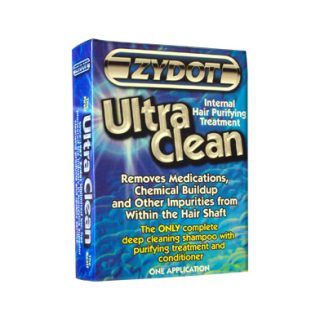
Zydot Ultra Clean Shampoo
$35.00Add to cartZydot Ultra Clean Shampoo – 1 Selling Detoxifying Hair Treatment on the Market Hair Purifying Shampoo is designed for extremely swift yet elegant removal of all toxin residues. Within 10 minutes, you will be in the “Clean Zone” for up to 8 hours. It is safe for the scalp and all hair types. It does not …
-
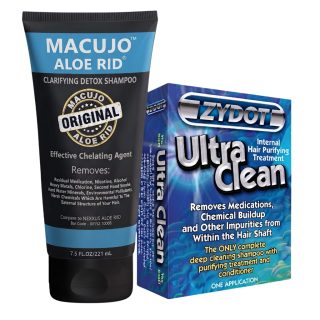
Macujo Aloe Rid 7.5 oz and Zydot Ultra Clean Shampoo
$165.00Add to cartOne bottle of Macujo Aloe Rid is good for 12 to 20 Mike’s Macujo washes.
This complete bundle includes Macujo Aloe Rid 7.5oz, Zydot Ultra Clean Shampoo, printed instructions, video links, and phone support to help you get clean successfully.
-
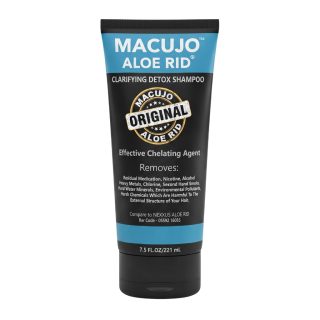
The Macujo Aloe Rid 7.5 oz Old Formula Shampoo
$145.00Add to cartOne bottle of Macujo Aloe Rid Old Formula Shampoo is good for 12 to 20 Macujo washes.
This 7.5 oz bottle is expertly formulated with high concentrations of propylene glycol to help remove toxins from your hair when used with the Macujo Method.
Each order includes:
- Phone Support
- Instructional Video Links
- Instructions Included
-
2 Clear Skin Astringent & Tide Detergent Bundle
$45.00Add to cartThis convenient bundle is specially created for international users who do not have local access to these specific items.
It provides enough product for 5 to 8 Mike’s Macujo washes and includes two bottles of Clear Skin astringent and one bottle of Tide liquid detergent.
How Hair Follicle Drug Tests Work
To effectively prepare for a hair screening, it is vital to understand how drug metabolites interact with your hair biology.
- The Mechanism: When substances or medications are consumed, they enter the bloodstream. As blood circulates through the body, active metabolites are transferred into the nourishing blood vessels surrounding the hair follicles, embedding themselves into the growing hair strand.
- The 90-Day Detection Window: Standard testing facilities routinely harvest a 1.5-inch sample of head hair cut as close to the scalp as possible. Because human hair grows at an average rate of approximately 0.5 inches per month, a 1.5-inch sample establishes a standard look-back period of roughly 90 days.
- The Two-Tier Laboratory Process: Laboratories utilize a dual-stage analytical protocol to ensure accuracy:
- Initial Screening (ELISA): An immunoassay test designed to rapidly filter out clean samples and flag those exceeding preset thresholds.
- Confirmatory Analysis (GC-MS / LC-MS): Any initial positive sample is subjected to advanced Gas Chromatography-Mass Spectrometry or Liquid Chromatography-Mass Spectrometry. This precise confirmatory test separates all chemicals, quantifies specific metabolites, and eliminates false positives.
Common Substances Screened & Laboratory Cutoff Levels
Testing panels vary depending on the employer or organization, ranging from standard 5-panel tests up to comprehensive 12-panel or 18-panel screens. Laboratories enforce rigid cutoff levels to distinguish between negative and positive findings:
- Marijuana (THC): Initial screening at 1 pg/mg; Confirmation level at 0.1 pg/mg. (Note: THC has low binding characteristics in hair, making light or occasional use harder to detect, but heavy chronic use binds significantly).
- Amphetamines & Methamphetamine: Screened and confirmed at 300 pg/mg.
- Cocaine: Screened and confirmed between 300 and 500 pg/mg.
- Opiates (Heroin, Morphine, Codeine, Oxycodone): Screened and confirmed between 200 and 500 pg/mg.
- PCP, Benzodiazepines, & Barbiturates: Evaluated under strict standard toxicological thresholds.
Debunking Dangerous Myths About Passing Hair Tests
Internet forums and unverified blogs are filled with myths that frequently cause individuals to fail their screenings:
- Myth 1: Shaving your head will successfully dodge the test.
Fact: If scalp hair is missing or shaved down, test administrators are authorized to harvest body hair from your arms, legs, chest, or back. Body hair grows at a considerably slower rate and retains drug metabolites over an even longer timeframe. Furthermore, arriving at a testing facility completely shaved often triggers immediate suspicion, leading to alternative testing methods. - Myth 2: Bleaching your hair removes all drug residues.
Fact: While bleaching alters hair pigmentation and strips away roughly 30% to 40% of surface contaminants, it cannot penetrate deep into the inner cortex where stubborn metabolites are safely anchored. Labs utilizing GC-MS confirmation will still easily detect chemical markers. - Myth 3: Liquid urine detox drinks work for hair follicles.
Fact: Commercial detox drinks are formulated exclusively to flush the bladder and dilute urine temporarily for urinalysis; they have zero chemical impact on hair shafts. - Myth 4: Basic home remedies like vinegar or baking soda alone are enough.
Fact: Randomly applying kitchen ingredients without a structured, multi-step chemical and mechanical process only cleans surface oils and fails to break down the keratin-bound inner cortex.
The Proven Protocol: Mike’s Macujo Method™
To successfully eliminate drug metabolites locked deep within the hair shaft, you must rely on a proven, comprehensive system.
View Mike’s Macujo Method for washes
By navigating to the official method page, you will gain access to the precise 9-step cleansing protocol, instructions on utilizing authentic products (such as genuine Macujo Aloe Rid® Shampoo), and guidance on pairing them with Zydot Ultra Clean Shampoo as a test-day finishing treatment to clear external surface residues, styling buildup, and secondhand smoke contamination.
-
Zydot Ultra Clean Shampoo
$35.00Add to cartZydot Ultra Clean Shampoo – 1 Selling Detoxifying Hair Treatment on the Market Hair Purifying Shampoo is designed for extremely swift yet elegant removal of all toxin residues. Within 10 minutes, you will be in the “Clean Zone” for up to 8 hours. It is safe for the scalp and all hair types. It does not …
-
Macujo Aloe Rid 7.5 oz and Zydot Ultra Clean Shampoo
$165.00Add to cartOne bottle of Macujo Aloe Rid is good for 12 to 20 Mike’s Macujo washes.
This complete bundle includes Macujo Aloe Rid 7.5oz, Zydot Ultra Clean Shampoo, printed instructions, video links, and phone support to help you get clean successfully.
-
The Macujo Aloe Rid 7.5 oz Old Formula Shampoo
$145.00Add to cartOne bottle of Macujo Aloe Rid Old Formula Shampoo is good for 12 to 20 Macujo washes.
This 7.5 oz bottle is expertly formulated with high concentrations of propylene glycol to help remove toxins from your hair when used with the Macujo Method.
Each order includes:
- Phone Support
- Instructional Video Links
- Instructions Included
-
2 Clear Skin Astringent & Tide Detergent Bundle
$45.00Add to cartThis convenient bundle is specially created for international users who do not have local access to these specific items.
It provides enough product for 5 to 8 Mike’s Macujo washes and includes two bottles of Clear Skin astringent and one bottle of Tide liquid detergent.
Determining Your Required Washes & Pre-Test Self-Screening
- Calculate Your Exact Target: Because individual exposure levels, substance types, body composition, and usage frequencies vary widely, there is no universal wash count that applies to everyone. Users must complete the official Mike Macujo Required Washes Calculator to evaluate their unique 90-day exposure history and determine the precise number of cleansing sessions required.
- Verify Cleanliness at Home: Before walking into your official collection appointment, eliminate pre-test anxiety by utilizing an At-Home Hair Follicle Test Kit. These laboratory-grade kits test for up to 18 distinct drug substances and mirror professional facility accuracy, giving you definitive proof of your detox success before your official screening.
Practical Preparation Guidelines
- Cease Substance Use Immediately: The moment you learn of an upcoming test, strict abstinence is mandatory to prevent adding fresh metabolites to your system.
- Avoid Styling Products on Test Day: On the day of your official collection, refrain from using heavy hair gels, hairsprays, leave-in conditioners, or waxes, as these can complicate sample collection.
Frequently Asked Questions (FAQs)
- Can light or one-time drug use be detected on a hair follicle test?
Yes. Hair follicle screenings are exceptionally sensitive and designed to identify even minor amounts of drug metabolites accumulated over the 90-day detection window. - Can I substitute a regular drugstore clarifying shampoo for Macujo Aloe Rid?
No. Standard retail shampoos cannot penetrate the inner cortex of the hair shaft; only authentic Macujo Aloe Rid® Shampoo possesses the specific formulation required for Mike’s method. - What success rate can I expect when following the proper protocol?
When authentic products are used, exposure information is reported accurately, and every calculated wash and direction is strictly completed, customer data demonstrates a success rate exceeding 98% to 99%. -
Zydot Ultra Clean Shampoo
$35.00Add to cartZydot Ultra Clean Shampoo – 1 Selling Detoxifying Hair Treatment on the Market Hair Purifying Shampoo is designed for extremely swift yet elegant removal of all toxin residues. Within 10 minutes, you will be in the “Clean Zone” for up to 8 hours. It is safe for the scalp and all hair types. It does not …
-
Macujo Aloe Rid 7.5 oz and Zydot Ultra Clean Shampoo
$165.00Add to cartOne bottle of Macujo Aloe Rid is good for 12 to 20 Mike’s Macujo washes.
This complete bundle includes Macujo Aloe Rid 7.5oz, Zydot Ultra Clean Shampoo, printed instructions, video links, and phone support to help you get clean successfully.
-
The Macujo Aloe Rid 7.5 oz Old Formula Shampoo
$145.00Add to cartOne bottle of Macujo Aloe Rid Old Formula Shampoo is good for 12 to 20 Macujo washes.
This 7.5 oz bottle is expertly formulated with high concentrations of propylene glycol to help remove toxins from your hair when used with the Macujo Method.
Each order includes:
- Phone Support
- Instructional Video Links
- Instructions Included
-
2 Clear Skin Astringent & Tide Detergent Bundle
$45.00Add to cartThis convenient bundle is specially created for international users who do not have local access to these specific items.
It provides enough product for 5 to 8 Mike’s Macujo washes and includes two bottles of Clear Skin astringent and one bottle of Tide liquid detergent.
-
Recommendations
-
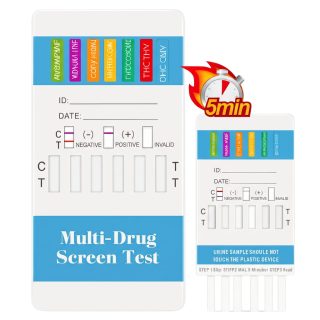 CLIA Waived 13 Panel Urine Test Dip Card With FEN/1ng
$11.95
-
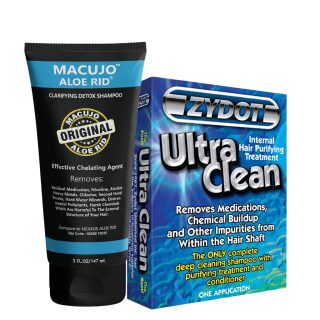 New 5oz Macujo Aloe Rid + Zydot Ultra Clean Shampoo
$120.00
-
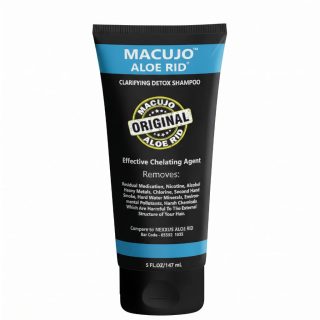 New 5oz. Macujo Aloe Rid Old Formula Shampoo
$95.00
-
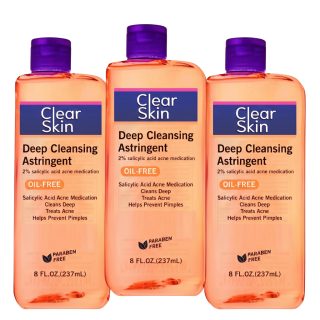 (3-Pack) Clear Skin Deep Cleansing Astringent (2% Salicylic Acid)
$30.00
-
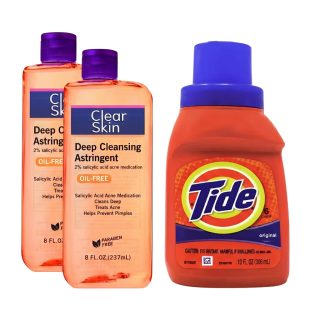 2 Clear Skin Astringent & Tide Detergent Bundle
$45.00